The Human Element in Transformation: Solving the 'Human Variable' Before the Variable Frequency Drive
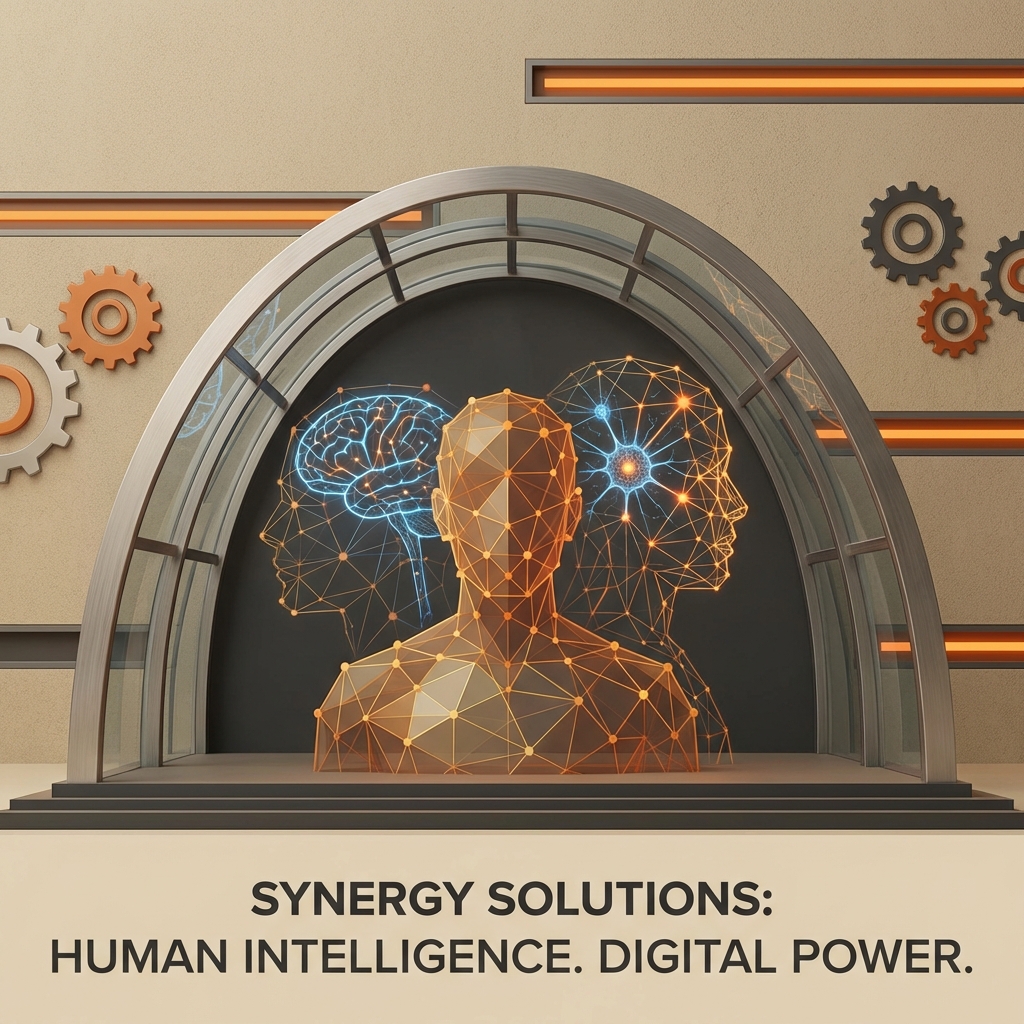
The Human Element in Transformation: Solving the 'Human Variable' Before the Variable Frequency Drive
Digital transformation is failing not because of the technology, but because of the people. Learn why industrial leaders must prioritize 'Cultural Infrastructure' to bridge the gap between a pilot and a global standard.
In the clean, quiet boardrooms of modern industrial giants, digital transformation is often discussed as a mathematical certainty. Executives swap spreadsheets filled with projected Yield improvements, OEE uplifts, and maintenance cost reductions. They speak of "smart factories," "edge intelligence," and "autonomous orchestration" as if these were turnkey solutions that simply need to be plugged into the existing wall sockets.
Yet, when we step out of the boardroom and onto the factory floor—where the heat, noise, and vibration of real-world production take place—the story changes. Here, the "miracle" AI system sits unused because the data entry was too cumbersome for a worker in heavy gloves. The "predictive" dashboard is ignored because it once flagged a false positive that cost an entire shift's bonus. The million-dollar digital twin is effectively a digital paperweight because nobody bothered to explain to the 30-year veteran operator why his intuition was being "replaced."
At LOCHS RIGEL, we have observed a consistent pattern across hundreds of Fortune 500 manufacturing audits: Technology is a multiplier, but humans are the base integer. If the base is zero, the result remains zero, no matter how powerful the multiplier.
// DATA_SOURCE: GLOBAL TRANSFORMATION ADOPTION AUDIT // 2025
The Technical Trap: Why We Default to Data
It is easy to understand why leadership teams focus on the technical stack. Tech is tangible. You can see a server rack. You can measure the latency of a 5G network. You can audit the code of an algorithm. Technical problems have "fixes"—patches, upgrades, and replacements.
The human element, by contrast, is "messy." It involves pride, fear, cultural inertia, and the invisible social hierarchies of the plant floor. Managing people doesn't come with a version control system like Git or a deployment orchestration tool like Kubernetes.
Consequently, organizations fall into the Technical Trap: the belief that if the technology is good enough, people will naturally gravitate toward it. In the high-stakes world of industrial production, the opposite is true. If the technology is perceived as a threat to an operator’s autonomy, safety, or livelihood, they will instinctively—and often unconsciously—resist it.
The Transformation Ratio
True industrial scale requires a shift from 'Software as a Service' to 'Software as a Partner'. If your technology doesn't make the human's life easier in the first 15 minutes of use, it has already failed.
Common Pitfalls: The Four Horsemen of Transformation Failure
Through our forensic analyzes of stalled digital initiatives, we have identified four recurring human-centric pitfalls that kill transformation projects before the first sensor is even commissioned.
1. The "Black Box" of Distrust
Deep learning and AI are powerful, but they are often opaque. If an AI tells an operator to stop a multimillion-dollar production line because it predicts a bearing failure, the operator’s first instinct is: "Why?"
If the system cannot explain its reasoning in the language of the shop floor (e.g., "The vibration frequency in the drive-side bearing has shifted by 15%, correlating with early-stage fatigue"), the operator will likely override the alert to hit their production quota. This results in the "Explainability Gap." When people don't understand how a tool works, they don't trust it. When they don't trust it, they don't use it.
2. Incentive Friction
This is perhaps the most overlooked barrier. Most factory workers are incentivized by throughput and quality. If you introduce a "Transformation Tool" that requires 10 minutes of manual data entry or forces a worker to deviate from their optimized workflow, you are effectively asking them to work against their own paycheck.
Scaling fails because leadership assumes workers will sacrifice their performance metrics for the "greater good" of a corporate data lake. They won't. If the digital tool adds friction to the physical task, it will be bypassed.
3. The "Replacement" Myth
The media loves to talk about "AI replacing workers." For an operator who has spent 25 years mastering the nuances of a specific extruder, see a new "Digital Intelligence" platform installed is not seen as an upgrade—it is seen as a replacement.
This fear leads to Passive Resistance: workers providing "dirty" data, failing to report system errors, or refusing to interact with new interfaces. Without worker buy-in, the AI stays blind to the "Ground Truth" that only the human expert possesses.
4. The "Air-Dropped" Solution
Success often dies in the transition from a pilot to a global rollout. A corporate "Transformation Team" (often external consultants) builds a solution in a vacuum and "air-drops" it into a plant. The local team, who wasn't consulted during the design phase, views this as "Corporate Interference." They have no ownership over the success of the tool.
Addressing the Variable Early: The LOCHS RIGEL Governance of Empathy
How do organizations avoid these pitfalls? At LOCHS RIGEL, we advocate for a strategy we call the Governance of Empathy. It is the systematic inclusion of the human variable into the engineering lifecycle.
The "Operator-Zero" Strategy
Before a single line of code is written, identify your "Operator-Zeros"—the most respected, most experienced, and often the most skeptical workers on the shop floor.
Bring them into the design phase. Make them the co-authors of the solution. If the most skeptical veteran in the plant becomes the primary advocate for the new AI tool, the rest of the facility will follow. Cultural change doesn't happen from the Top-Down; it happens from the Center-Out.
Designing for the "Front-Line Environment"
A dashboard that looks beautiful on a MacBook Pro in a well-lit office is often illegible on a tablet covered in oil, under flickering industrial lights, while the operator is wearing protective eyewear.
Addressing the human element means engineering for the physical reality of the job. This includes:
- Large, high-contrast touch targets for gloved hands.
- Haptic and visual alerts that cut through factory noise.
- Zero-Entry data acquisition: Utilizing computer vision or automated sensor mapping to eliminate manual typing.
The UI is the Strategy
An operator is not a data scientist. If your 'Insight Dashboard' requires a degree in statistics to interpret, you haven't built a tool; you've built a distraction.
Scaling the Human Element: Building the "Digital Guild"
To move from a single site to a global capability, you cannot rely on a central team. You must decentralize the intelligence. At LOCHS RIGEL, we help our clients build "Digital Guilds" within their organizations.
This involves:
- Redefining Roles: Moving from "Operator" to "Process Orchestrator." Workers are taught to manage the AI, not compete with it.
- Gamified Ownership: Incentivizing workers based on how much they help improve the model. If a worker corrects an AI's false positive, they should be rewarded more than if the AI was simply right.
- The 10-20-70 Rule: We advise our clients to allocate their transformation budget as follows:
- 10% for Mathematical Models (AI/ML).
- 20% for Data Infrastructure (UNS/Edge).
- 70% for Business Process and Cultural Change Management.
Most organizations flip this, spending 70% on technology and 10% on people. Their results reflect that mismatch.
The Walkaway: Three Questions for Your Transformation Office
If you are currently leading a digital initiative, stop looking at your AWS bill and start looking at your people. Ask yourself:
- The Friction Test: "Does this tool save the operator 30 minutes of frustration, or does it add 30 minutes of administration?"
- The Agency Test: "Does this system give the operator more power to solve problems, or does it strip them of their decision-making authority?"
- The Ownership Test: "If I left the plant today, would the local workers keep using this tool because they love it, or would they stop the moment they felt no one was watching?"
Transformation is not an IT project. It is a social contract. At LOCHS RIGEL, we don't just bridge the gap between IT and OT; we bridge the gap between the Machine and the Human. Because in the end, the smartest factory in the world is still only as intelligent as the people running it.
To learn more about our Cultural Transformation Framework and how we help industrial leaders scale their digital initiatives, contact our strategic advisory team today.